What is Obsessive-Compulsive Disorder (OCD)
OCD can affect anyone and appears in many different ways or “themes.” Across OCD themes, intrusive thoughts, images, or taboo urges are unwanted and inconsistent with a person’s values or desires. In Black and brown communities, sometimes OCD can hide in plain sight—behind cultural norms, family habits, faith practices, or “just little quirks”—and feel especially difficult to disclose.
Learn more about OCD, its different themes, and how it can show up beyond counting, cleaning, or checking.
Created in partnership with ERP Kaleidoscope.
Tool Filed Under: Mental Health Education, Training Resources, Image
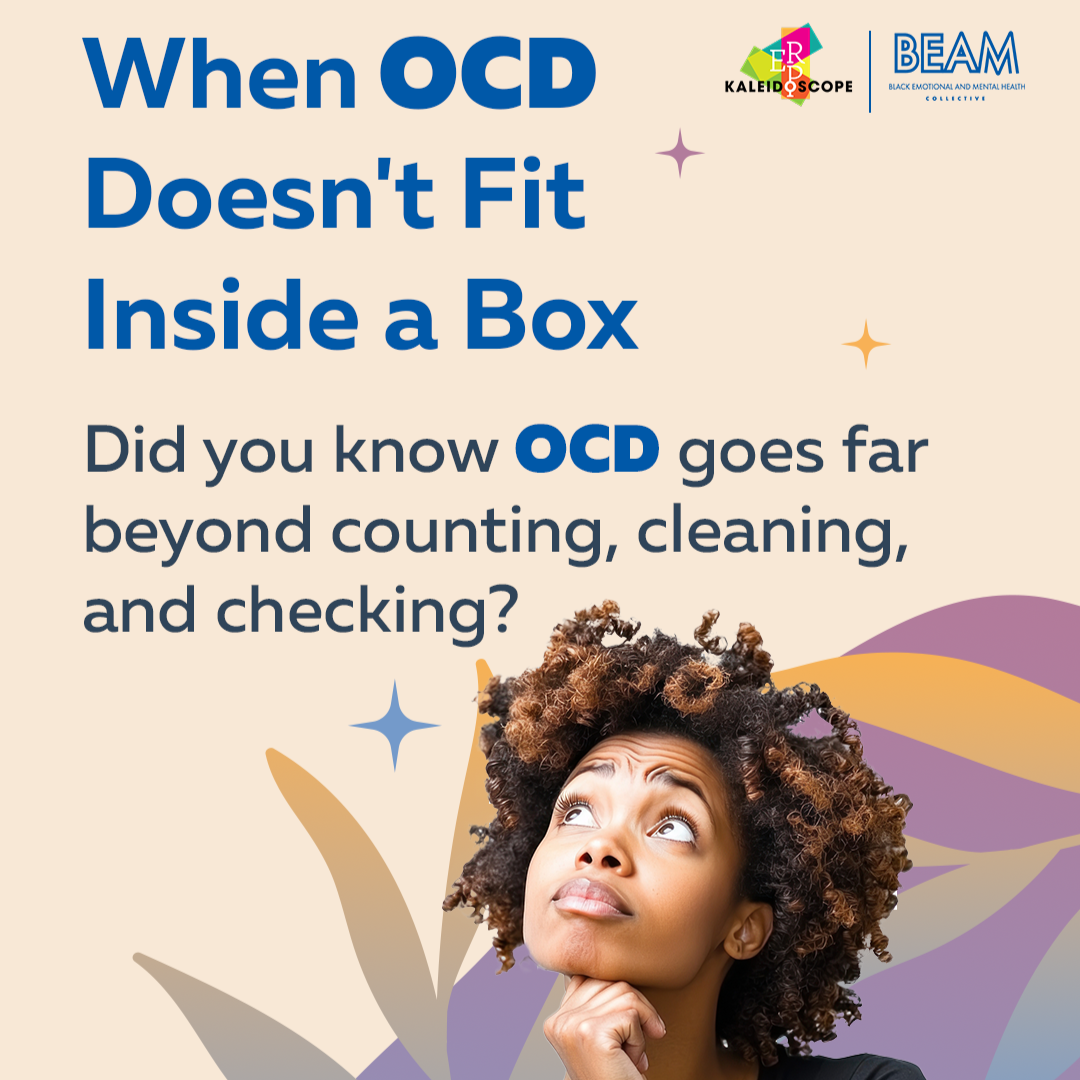
Image Description:
Slide 1:
"When OCD Doesn't Fit Inside a Box"
Did you know OCD goes far beyond counting, cleaning, and checking?
Slide 2:
What is Obsessive-Compulsive Disorder (OCD?)
OCD is the experience of unwanted thoughts, images, or urges that feel scary, uncomfortable, or hard to shake, followed by repeated behaviors or mental rituals to feel safer or more certain.
These thoughts can include taboo themes that go against a person’s values, which can feel especially difficult for Black and Brown individuals to disclose.
Slide 3:
In Black and Brown communities, sometimes OCD can hide in plain sight—behind cultural norms, family habits, faith practices, or “just little quirks.”
But OCD can affect anyone, and it can show up in many different ways.
Slide 4:
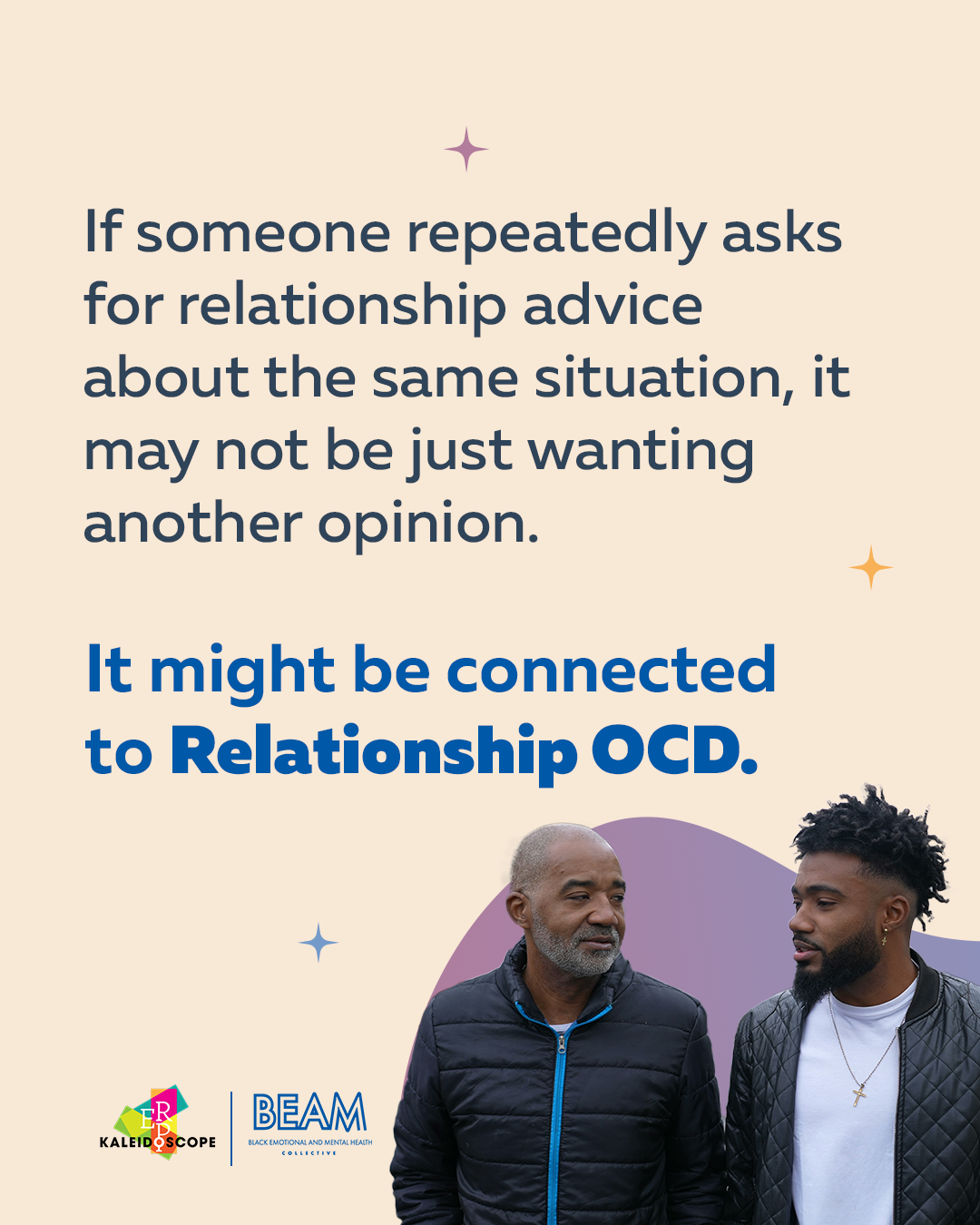
If someone repeatedly asks for relationship advice about the same situation, it may not be just wanting another opinion.
It might be connected to Relationship OCD.
Slide 5:
Relationship OCD is when someone has intrusive doubts or fears about a relationship. This often leads to compulsive behaviors that involve checking the health of the relationship or attraction to one’s partner. It can impact romantic, familial, or even platonic relationships.
Slide 6:
If someone avoids hugging, touching, sitting near, or being alone with certain people, maybe it's not just being distant/not affectionate.
It might be connected to Harm OCD.
Slide 7:
Harm OCD is when someone has intrusive, unwanted fears about themselves or someone else causing harm accidentally or impulsively. This can include suicide OCD, or fears of being perceived as someone who would hurt children or animals, and more.
Slide 8:
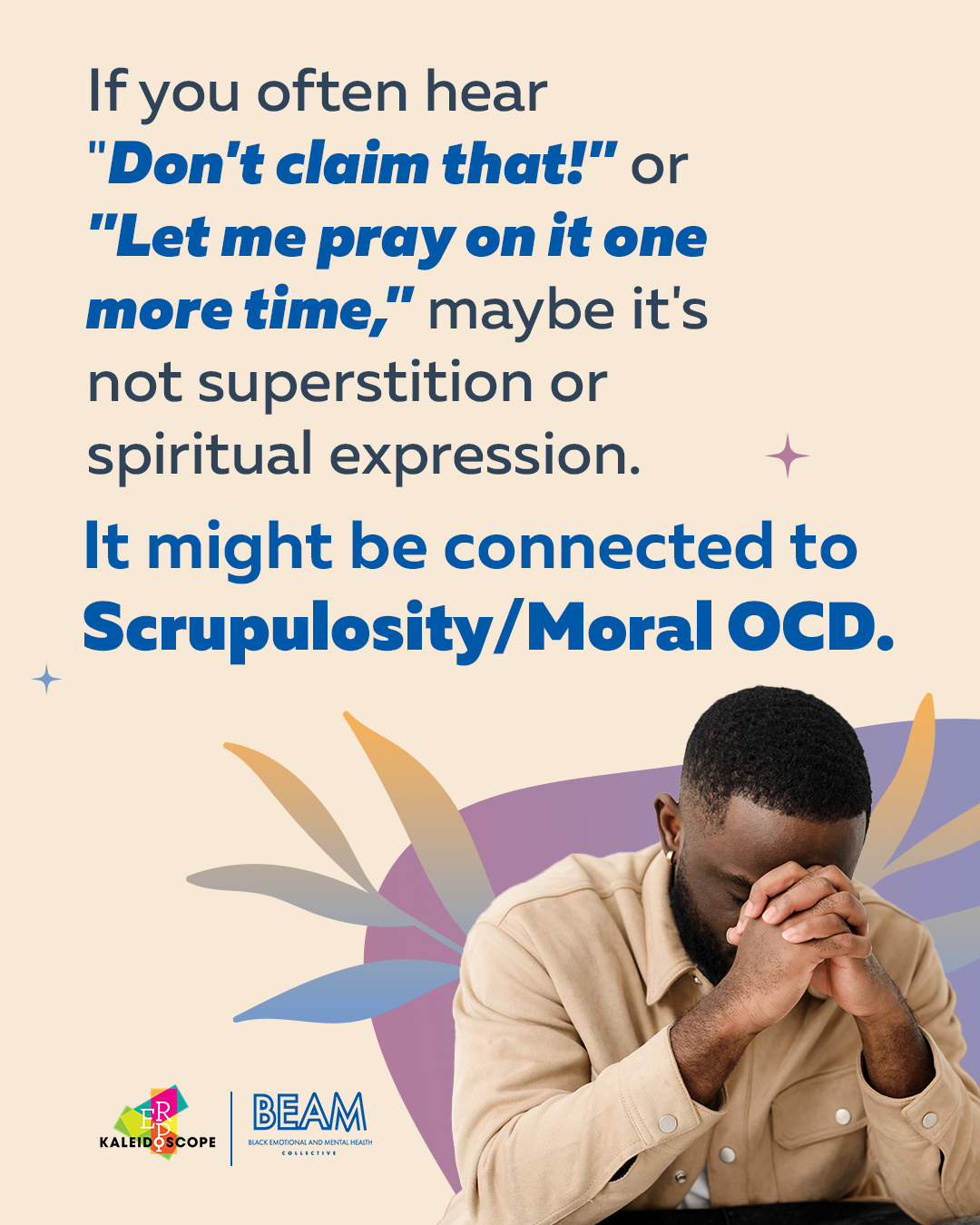
If you often hear "Don't claim that!" or "Let me pray on it one more time," maybe it's not superstition or spiritual expression.
It might be connected to Scrupulosity/Moral OCD.
Slide 9:
Scrupulosity/Moral OCD is when someone has intrusive fears about religious practices, damnation, offending their higher power, blasphemy, morality, or being a “good” person. This can lead to repetitive compulsions for forgiveness, safety, or certainty, behaviors often mistaken for, or praised as, strong faith or morality.
Slide 10:
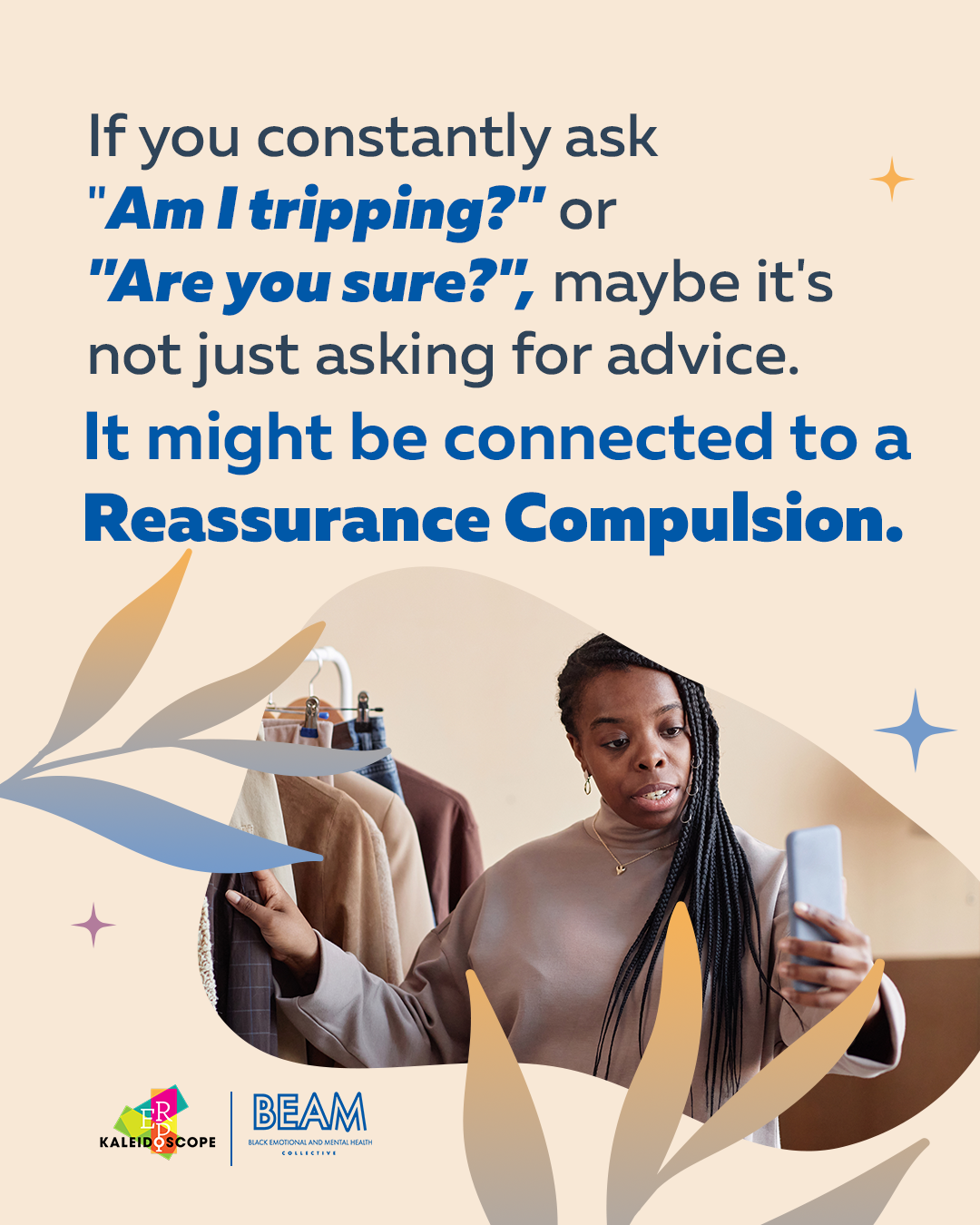
If you constantly ask "Am I tripping?" or "Are you sure?", maybe it's not just asking for advice.
It might be connected to a Reassurance compulsion.
Slide 11:
Reassurance Compulsion is when someone repeatedly looks to themselves, friends, or family for relief and certainty that bad outcomes won’t occur. It can also include excessively searching Google, asking AI, or consulting professionals about the same concerns.
Slide 12:
These intrusive or distressing thoughts do not reflect who you or your loved ones are.
Experiencing them does not make someone more likely to act on them. You and your loved ones are still caring, capable, and deserving—even when OCD makes you feel otherwise.
Slide 13:
Want to learn more about OCD?
Our partner ERP Kaleidoscope offers BIPOC-centered OCD education, support groups, and advocacy. For more information, visit erpkaleidoscope.com.
More Images: